Beef tongue
A versatile beef cut used in cuisines worldwide.

National Library NZ on The Commons · No restrictions
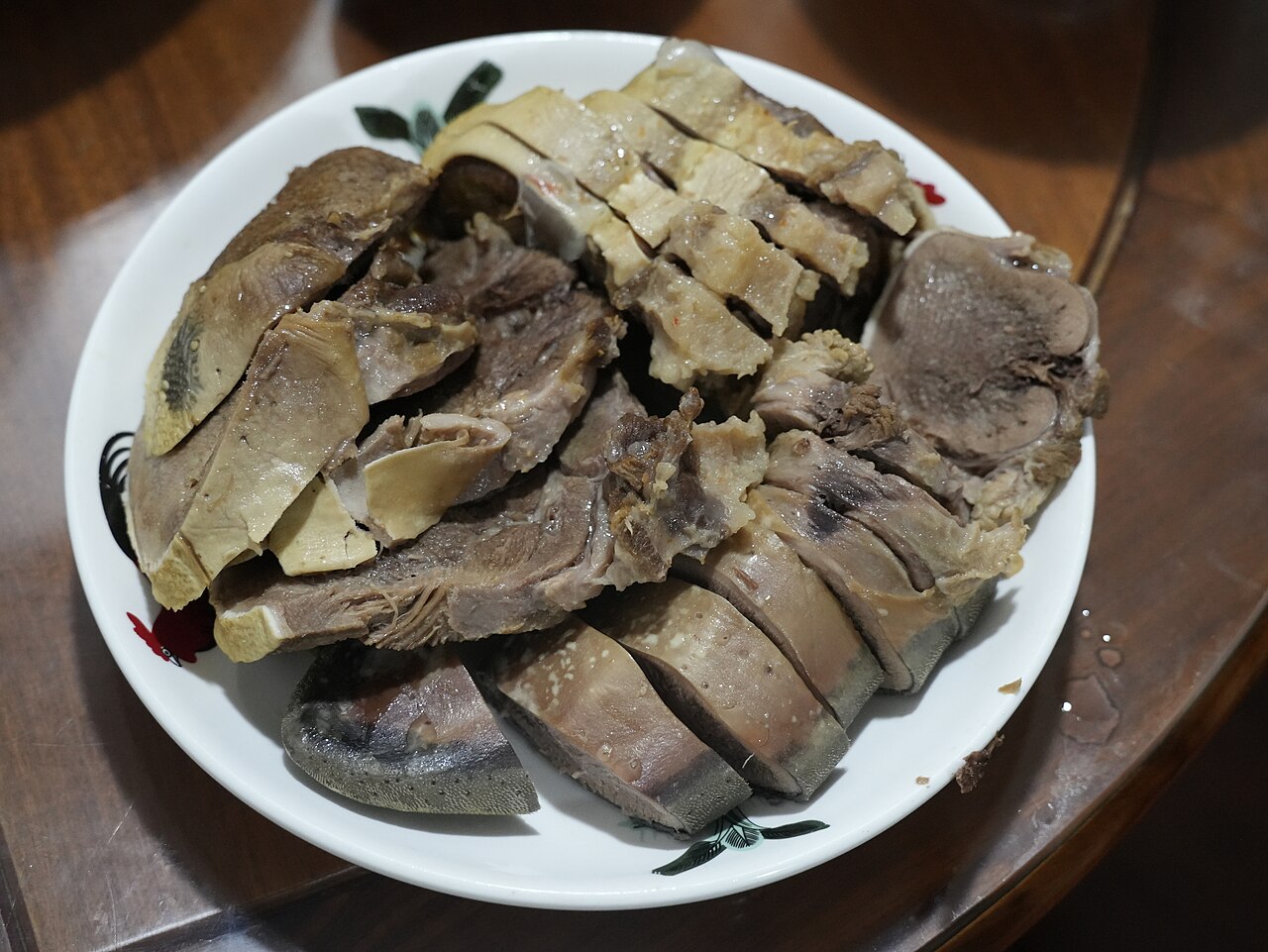
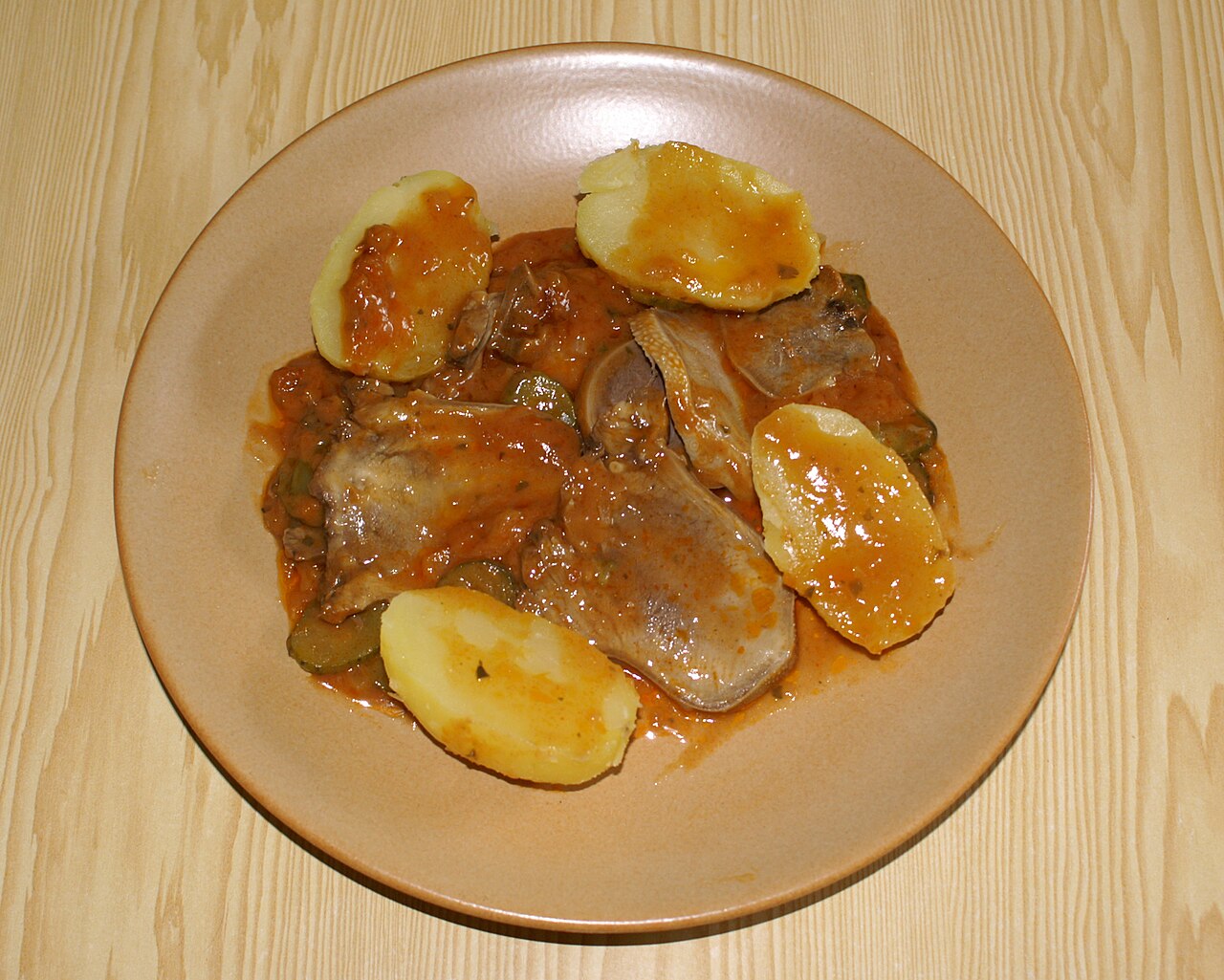
Beef tongue—sometimes called neat's tongue or ox tongue—comes from the tongue of a cow. It can be boiled, pickled, roasted, or braised in sauce, and it features in cuisines around the world. In Mexico it is used as a taco filling, while in the United Kingdom it appears in open-faced sandwiches. France and Belgium serve it with Madeira sauce; Ashkenazi and Eastern European cuisines pair it with chrain. Germans prepare a white roux with vinegar and capers, or a horseradish cream that is also common in Polish cooking.
The cut is relatively lean, with fat typically contributing around 25–30% of its calories. Large quantities are exported from Canada, especially the province of Alberta.
For preparation, the tongue is often seasoned with onion and other spices, then boiled. After cooking, the skin is removed. Pickled tongue is popular because it comes already spiced. If cooked in a sauce, that sauce can later be reused for meatballs or other dishes. Another method involves scalding the tongue in hot water, removing the skin, and roasting it in the oven, using the pan drippings to make gravy.
In North America, beef tongue is a key ingredient in tongue toast, an open-faced sandwich eaten at breakfast, lunch, or dinner, and sometimes served as an hors d'oeuvre. Mexican cuisine uses it widely in tacos and burritos (lengua). In Puerto Rico, lengua al caldero (pot roast tongue) and lengua rellena (braised stuffed tongue) are both served with pique criollo. In France and Belgium, boiled tongue is often cooked with mushrooms in Madeira sauce, or served with a vinaigrette. Ashkenazi Jewish, Russian, and Ukrainian cuisines commonly serve boiled tongue with chrain. Beef or veal tongue also appears in classic recipes for Russian salad. In Austria, Germany, Czechia, and Poland, it is served with chrain or horseradish cream sauce; the traditional Berlin or North German version adds capers and vinegar to a broth-based sauce thickened with white roux. Japanese cuisine features gyūtan, grilled tongue that originated in Sendai. Tongue is also part of the cuisines of Albania, Argentina, Brazil, Bulgaria (tongue with butter), Britain, France, Indonesia (semur lidah, or beef tongue stew), Italy (typical in Piemonte, Liguria, and Veneto), Colombia, China (braised), Japan, Kenya, Korea (hyeomit gui), the Philippines, Lithuania, Latvia, Norway, Mexico, Mongolia, Nicaragua, Persia (fri
- also known as
- neat's tongue, ox tongue
- cut of
- beef
- common preparations
- boiled, pickled, roasted, braised
- fat content
- around 25–30% of caloric content
- major exporting region
- Canada, specifically Alberta
Lore & Background
Beef tongue is often seasoned with onion and other spices, then boiled. After cooking, the skin is removed. Pickled tongue is commonly used because it is already spiced. If cooked in a sauce, the sauce can be reused for meatballs or other dishes. Another method involves scalding the tongue in hot water, removing the skin, and roasting it in the oven while making gravy from the pan drippings.
Reader's Guide
Beef tongue holds significance across many culinary traditions. In Mexico it is used for taco and burrito fillings (lengua). In the United Kingdom it appears in open-faced sandwiches. France and Belgium serve it with Madeira sauce or vinaigrette. Ashkenazi and Eastern European cuisines pair it with chrain. Germany and Poland offer it with horseradish cream or a white roux sauce with capers and vinegar. In Japan, grilled tongue (gyūtan) originates from Sendai. The cut is also featured in Albanian, Argentine, Brazilian, Bulgarian, British, French, Indonesian, Italian, Colombian, Chinese, Kenyan, Korean, Filipino, Lithuanian, Latvian, Norwegian, Mongolian, Nicaraguan, Persian, Portuguese, Romanian, Spanish, South African, Turkish, and Uruguayan cuisines. Its high fat content contributes up to 72% of its calories, and Canada (especially Alberta) exports large quantities.
Did You Know?
- Beef tongue is also known as neat's tongue or ox tongue.
- Fat contributes around 25–30% of its caloric content.
- In Japan, grilled tongue (gyūtan) originated in Sendai.
- Canada, specifically Alberta, exports large quantities of beef tongue.
A Cut That Travels the World
Beef tongue, also called neat's tongue or ox tongue, stands as one of the most geographically widespread cuts of meat in global cuisine. From the taco fillings of Mexico, where it appears as lengua tucked into tacos and burritos, to the open-faced sandwiches of the United Kingdom, this single organ finds a home on countless tables. In France and Belgium, diners encounter it prepared with mushrooms in a rich Madeira sauce, while Ashkenazi Jewish and Eastern European traditions pair the boiled version with a sharp chrain. German and Polish kitchens reach for horseradish cream, and the traditional Berlin or North German preparation layers capers and vinegar into a sauce built on a white-roux broth. Across the Pacific, the city of Sendai in Japan claims gyūtan, a grilled tongue dish that has become a regional signature. The list of participating cultures stretches further still, encompassing Albanian, Argentine, Brazilian, Bulgarian, Chinese, Indonesian, Italian, Kenyan, Korean, Filipino, Lithuanian, Latvian, Norwegian, Mongolian, Nicaraguan, Persian, Portuguese, Romanian, Spanish, South African, Turkish, and Uruguayan cooking traditions.
From Pot to Plate: The Art of Preparation
The preparation of beef tongue demands patience and a few specific techniques that distinguish it from more common cuts. The most traditional approach involves seasoning the whole tongue with onion and an array of spices before submerging it in a pot of boiling water. Once fully cooked, the outer skin is carefully peeled away, revealing the tender flesh beneath. Chefs who work with pickled tongue gain a shortcut, since the spicing has already been accomplished during the pickling process. For those who prefer a roasted result, the method shifts: the tongue is first scalded in hot water to loosen the skin, which is then stripped off before the meat goes into the oven, where pan drippings are transformed into a savory gravy. A practical bonus of braising the tongue in a sauce is that the liquid does not go to waste; it can be repurposed later as a base for meatballs or any other dish. The cut lends itself to boiling, pickling, roasting, and braising, giving cooks a wide palette of techniques to explore.
Nutritional Weight and the Global Trade
Beef tongue carries a nutritional profile that sets it apart from leaner cuts of beef. Its fat content is exceptionally high, contributing as much as seventy-two percent of the total caloric value of the meat. This richness is partly what makes the cut so versatile in the kitchen, as the fat renders into sauces, gravies, and the natural juices that build during slow cooking. Beyond the kitchen, the tongue has become a meaningful commodity in international trade. Canada, and specifically the province of Alberta, ships large quantities of beef tongue to markets around the world, underscoring the cut's economic significance as an export product. The combination of its dense caloric profile and its status as a trade good means that beef tongue occupies a unique niche: it is simultaneously a humble offal cut and a product that moves in substantial volumes across borders, feeding both traditional home cooking and commercial food service in dozens of countries.
Signature Dishes and Regional Identities
Across the world, beef tongue has been woven into specific dishes that carry regional identity. In Puerto Rico, lengua al caldero, a pot-roasted preparation, and lengua rellena, a braised and stuffed version, are classic entries, both traditionally served alongside pique criollo, a local pepper sauce. In North America, tongue toast has earned a place as an open-faced sandwich enjoyed at breakfast, lunch, or dinner, and occasionally offered as an hors d'oeuvre. The Persian table presents the tongue in multiple forms—fried, roasted, boiled, or served cold within a sandwich—showing how one cut can anchor an entire spread. In Bulgaria, the preparation is deceptively simple: tongue served with butter. In the Italian regions of Piemonte, Liguria, and Veneto, it holds a place in the local repertoire. Indonesia features semur lidah, a beef tongue stew, while Korea offers hyeomit gui. In Russia and Ukraine, the boiled tongue appears not only on its own with chrain but also as an ingredient in the layered classic known as Russian salad, where it may be beef or veal tongue.
Gallery




Frequently Asked Questions
Who is Beef tongue?
Beef tongue, also called neat's tongue or ox tongue, is a lean cut taken from the tongue of a cow. In Belgian kitchens it occupies a respected spot among offal preparations.
What are Beef tongue's powers and role?
The cut is remarkably versatile, lending itself to boiling, pickling, roasting, or slow braising in rich sauces. In Belgium it most often appears braised and finished with a Madeira-based sauce, echoing the French tradition.
How does Beef tongue's story end on the plate?
In Belgian dining the dish typically concludes with a glossy Madeira sauce spooned over thinly sliced tongue. Because the cut stays relatively lean, with fat contributing roughly 25 to 30 percent of its caloric content, the final presentation feels elegant rather than heavy.
Why is Beef tongue important to Belgian cuisine?
It gives Belgian cooks a protein that bridges simple everyday stews and more refined restaurant entrées. Its adaptability means the same cut can anchor a humble boiled preparation or elevate a braised plate with a wine-based sauce.
Where does Beef tongue's journey begin?
The raw cut is sourced from cattle, and Canada—particularly the province of Alberta—stands as a major exporting region for the ingredient. Once it reaches Belgian kitchens, chefs transform it through various cooking methods into the finished dish.
More in Belgian cuisine 1-24
Spotted an error? Know more?
This is a living reference — every entry is fact-audited, and reader corrections feed straight into our audit queue. Suggest an edit · See this site's audit record