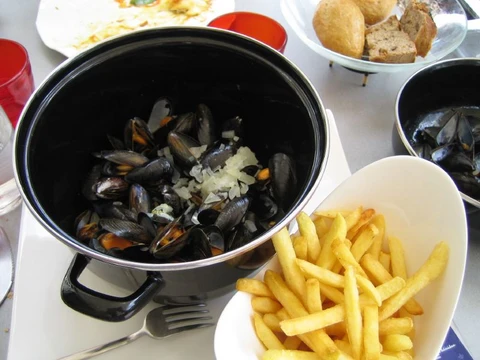
Brussels sprout
A bud-bearing cabbage cultivar, first cultivated near Brussels, Belgium.

Tomwsulcer · CC0
The Brussels sprout is a cultivated variety of cabbage, specifically the Gemmifera group of *Brassica oleracea*, raised for its small, edible buds. Although its cabbage relatives originated around the Mediterranean, the sprout itself showed up in northern Europe by the 13th century and was being grown near Brussels, Belgium, in the 1200s—hence its name. The term *gemmifera* translates to "bud-bearing."
These leaf vegetables measure about 1.5 to 4 centimeters across, looking like tiny cabbages. Ancient Romans likely grew predecessors of today’s Brussels sprouts, but the modern form may have been cultivated as early as the 13th century in what is now Belgium. The earliest written mention dates to 1587. By the 1500s, they were popular in the southern Netherlands, and their appeal spread across cooler parts of northern Europe, reaching Britain in the 1600s.
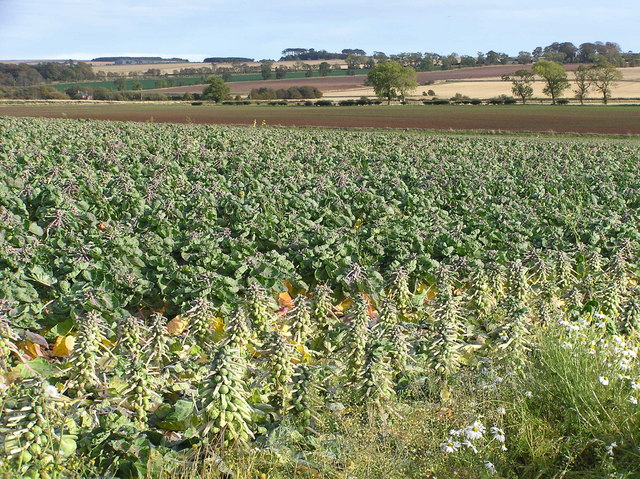
Brussels sprouts thrive in temperatures between 7 and 24°C, with peak yields at 15–18°C. Fields are ready to harvest 90 to 180 days after planting. The sprouts grow as buds in a spiral pattern along thick stalks that stand 60 to 120 centimeters tall, maturing from the bottom upward over several weeks. Harvesting can be done by hand, picking 5 to 15 sprouts at a time across multiple rounds, or by cutting the entire stalk at once for processing, or with a mechanical harvester. Each stalk yields about 1.1 to 1.4 kilograms, though commercial crops average around 900 grams per stalk. In northern temperate zones, the harvest runs from September to March, making them a traditional winter vegetable. In home gardens, freezing doesn’t harm quality, and sprouts are sweetest after a frost.
This vegetable belongs to the same species as broccoli, cabbage, collard greens, kale, and kohlrabi—all cruciferous plants in the Brassicaceae family. Many cultivars exist, including purple varieties like 'Ruby Crunch' or 'Red Bull,' which were developed later through natural mutation or selective breeding within Brussels sprouts, not as hybrids with purple cabbage. In the 1990s, Dutch scientist Hans van Doorn identified the bitter compounds sinigrin and progoitrin, leading seed companies to cross-breed archived low-bitterness varieties with modern high-yield ones, boosting the vegetable’s popularity.
In continental Europe, the Netherlands leads production with 82,000 metric tons, followed by Germany at 10,000 t
- field
- Agriculture, Horticulture
- known_for
- Edible buds resembling miniature cabbages, winter-stock vegetable
- first_written_reference
- 1587
- cultivation_origin
- Possibly ancient Rome; modern form in 13th-century Belgium
- bitter_compounds_identified
- Sinigrin and progoitrin (1990s, by Hans van Doorn)
Lore & Background
Predecessors to modern Brussels sprouts were probably cultivated in Ancient Rome. Brussels sprouts as they are now known were grown possibly as early as the 13th century in what is now Belgium. The first written reference dates to 1587. During the 16th century, they enjoyed a popularity in the southern Netherlands that eventually spread throughout the cooler parts of Northern Europe, reaching Britain by the 17th century. Brussels sprouts grow in temperature ranges of 7–24 °C, with highest yields at 15–18 °C. Fields are ready for harvest 90 to 180 days after planting. The edible sprouts grow like buds in helical patterns along the side of long, thick stalks of about 60 to 120 centimetres in height, maturing over several weeks.
Reader's Guide
Brussels sprouts are a cultivar group of the same species as broccoli, cabbage, collard greens, kale, and kohlrabi; they are cruciferous (family Brassicaceae). Many cultivars are available; some are purple, such as 'Ruby Crunch' or 'Red Bull'. The purple varieties are hybrids between purple cabbage and regular green Brussels sprouts developed by a Dutch botanist in the 1940s, yielding a variety with some of the red cabbage's purple colors and greater sweetness. In the 1990s, the Dutch scientist Hans van Doorn identified the chemicals that make Brussels sprouts bitter: sinigrin and progoitrin. This enabled Dutch seed companies to cross-breed archived low-bitterness varieties with modern high-yield varieties, over time producing a significant increase in the popularity of the vegetable. In Continental Europe, the largest producers are the Netherlands (82,000 metric tons) and Germany (10,000 tons). The United Kingdom has production comparable to that of the Netherlands, but its crop is generally not exported. Second to the Netherlands in export volume is Mexico, where the climate allows nearly year-round production. Most U.S. production is in California, with a smaller percentage of the crop grown in Skagit Valley, Washington, and to a lesser degree on Long Island, New York. Total US production is around 32,000 tons, with a value of $27 million. About 80 to 85% of U.S. production is for the frozen food market. Raw Brussels sprouts are 86% water, 9% carbohydrates, 3% protein, and negligible fat. In a 100 gram reference amount, they supply high levels of vitamin C (102% DV) and vitamin K (169% DV).
Did You Know?
- The group name gemmifera means 'bud-bearing'.
- Brussels sprouts are considered sweetest after a frost.
- The bitter chemicals sinigrin and progoitrin were identified in the 1990s by Dutch scientist Hans van Doorn.
- Purple varieties like 'Ruby Crunch' are hybrids between purple cabbage and green Brussels sprouts developed in the 1940s.
Origins, Naming & Early Spread
The Brussels sprout traces its botanical roots to the Gemmifera cultivar group within Brassica oleracea, a species shared with broccoli, kale, collard greens, and kohlrabi. While its broader cabbage family is native to the Mediterranean, the sprout itself first emerged in northern Europe around the 5th century. Its name is a direct nod to the Belgian city of Brussels, where cultivation is documented as early as the 13th century. The Latin group name gemmifera simply means "bud-bearing," a fitting descriptor for a vegetable whose edible parts are small, tightly closed buds. Predecessor varieties were likely already being grown in Ancient Rome, and the first surviving written reference to the modern form dates to 1587. By the 16th century, the vegetable had become a staple in the southern Netherlands before gradually spreading across cooler regions of Northern Europe, eventually reaching Britain by the 17th century. This slow, century-spanning diffusion from a single Belgian locality into a pan-European crop underscores how a modest garden plant could become a continental winter staple.
Growth, Harvest & Colour Varieties
Brussels sprouts are grown for their small edible buds, which measure 1.5 to 4 centimetres in diameter and resemble miniature cabbages. The plant produces these buds in helical patterns along the sides of a long, thick stalk standing 60 to 120 centimetres tall. Growth is temperature-sensitive, with peak yields at 15 to 18 degrees Celsius, though the crop tolerates a range from 7 to 24 degrees. Fields require 90 to 180 days after planting before harvest. In temperate northern latitudes, the picking season runs September through March, cementing the sprout's identity as a traditional winter vegetable. Quality does not deteriorate in freezing conditions; sprouts are considered sweeter after a frost. Each stalk can yield 1.1 to 1.4 kilograms, though commercial harvests average closer to 900 grams. Harvesting methods vary: some growers pick individual sprouts by hand into baskets over several passes of five to fifteen buds at a time, while others cut the entire stalk at once for processing or use mechanical harvesters. In the 1940s, a Dutch botanist created purple-hued hybrids by crossing purple cabbage with standard green sprouts, yielding varieties like 'Ruby Crunch' and 'Red Bull' that carry some of the red cabbage's colour alongside greater sweetness.
Taming the Bitterness & Kitchen Science
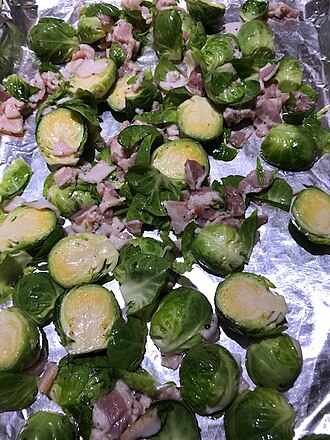
For decades, the pungent, garlic-like aroma that Brussels sprouts develop when overcooked was a major source of consumer dislike. That odour traces back to a specific sulfur compound called sinigrin, a glucosinolate that gives the vegetable its characteristic pungency. In the 1990s, Dutch scientist Hans van Doorn identified the precise chemicals responsible for the bitter taste: sinigrin and progoitrin. This breakthrough opened the door for Dutch seed companies to undertake a targeted breeding programme, cross-breeding archived low-bitterness varieties with modern high-yield lines. Over successive generations, the process produced sprouts with significantly reduced bitterness while maintaining productive output, and the vegetable's popularity rose accordingly. In the kitchen, the same sinigrin compound is what turns overcooked sprouts gray and soft with an overpowering smell. Chefs therefore favour roasting, which enhances natural sweetness and avoids the waterlogged, sulfurous result of prolonged boiling. Common finishing touches include Parmesan cheese, butter, balsamic vinegar, brown sugar, chestnuts, or cracked pepper. Some cooks also halve the sprouts to increase flat surface area for caramelization, though a cross-cut in the stem is sometimes avoided because it can cause the buds to become waterlogged when boiled.
Global Production, Trade & Shelf Life
The Netherlands leads continental European production at roughly 82,000 metric tons annually, with Germany contributing around 10,000 tons. The United Kingdom produces a comparable volume but largely consumes it domestically. In the global export market, Mexico ranks second behind the Netherlands, its climate permitting nearly year-round growing. The Baja region is the principal supplier to the American market, with additional output from the Mexicali, San Luis, and coastal zones. In the United States, the story begins with French settlers in Louisiana, where the first commercial plantings took root in the delta in 1925. By 1939, much of that cultivation had shifted to California's Central Coast. Today, several thousand acres are planted across San Mateo, Santa Cruz, and Monterey counties, where coastal fog and cool temperatures create ideal conditions, with a harvest window from June through January. A smaller share grows in Washington's Skagit Valley and on Long Island, New York. Total U.S. output hovers around 32,000 tons valued at roughly 27 million dollars, with 80 to 85 percent destined for the frozen food market. Once picked, sprouts keep for three to five weeks under near-freezing storage, about half that long in a standard refrigerator.
Gallery
Frequently Asked Questions
Who is Brussels sprout?
Brussels sprout is a bud-bearing cultivar of the Gemmifera group of Brassica oleracea, essentially a cabbage variety bred specifically for its small, edible leaf buds. It is a staple winter-stock vegetable in Belgian and broader northern European cuisine.
Where did Brussels sprout come from?
While its cabbage ancestors trace back to the Mediterranean region, the sprout form itself emerged in northern Europe by the 13th century. It was being cultivated in the fields around Brussels in the 1200s, which is how it earned its name.
What does Brussels sprout look like?
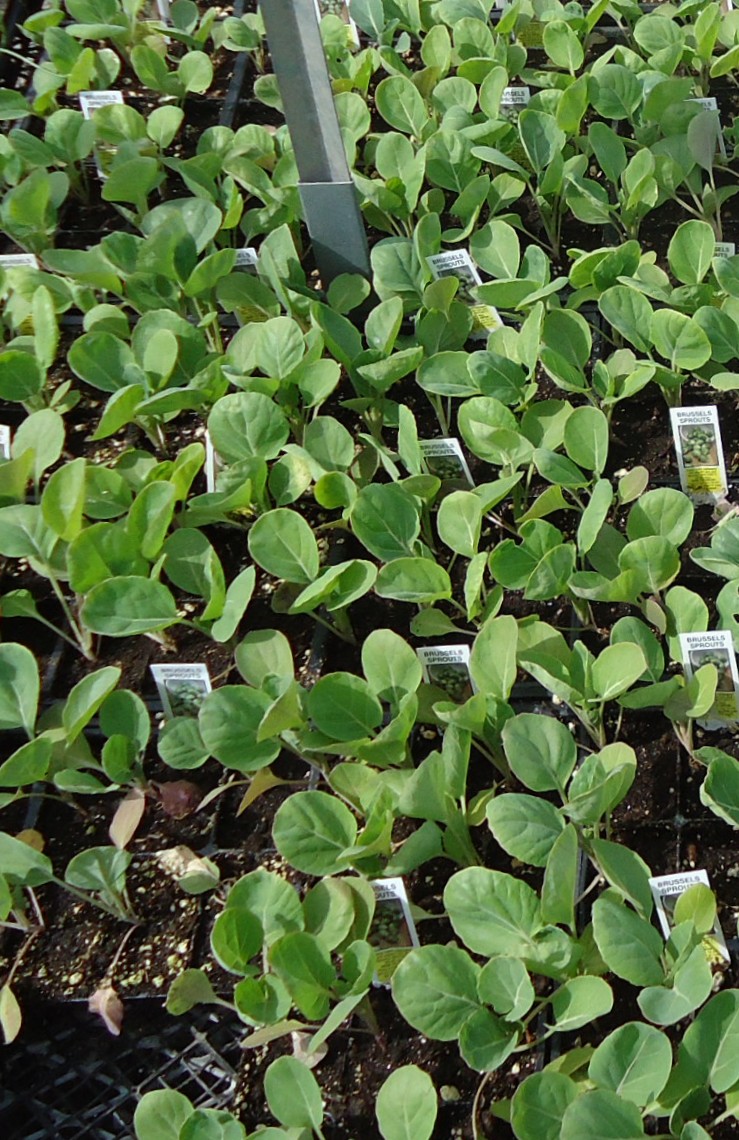
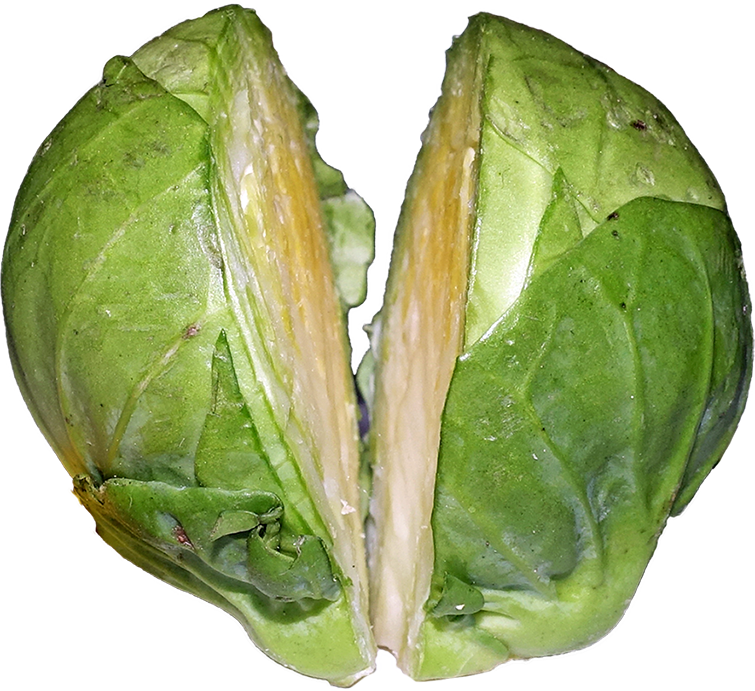
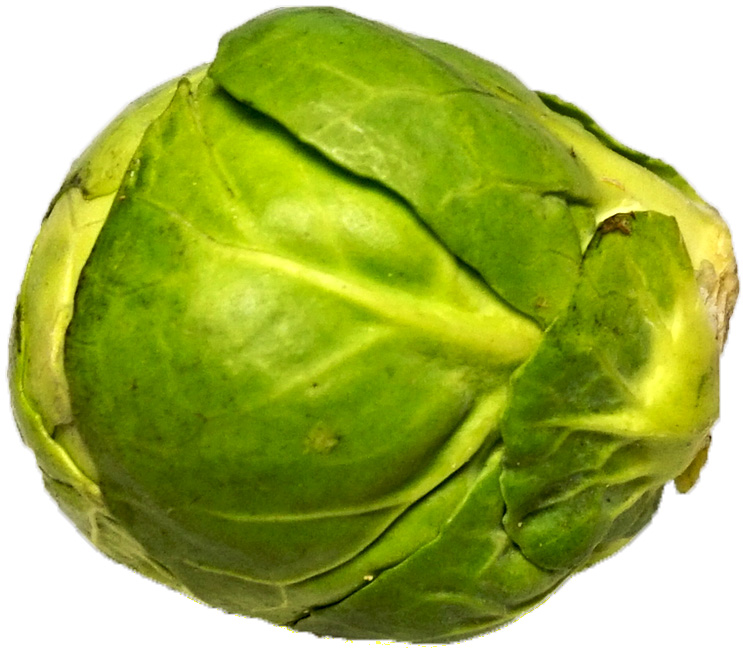
Each bud sits roughly 1.5 to 4 centimeters across, giving the vegetable the appearance of a cluster of miniature cabbages packed tightly along a central stalk. The Latin name gemmifera literally means 'bud-bearing,' capturing that compact, layered look.
Why is Brussels sprout bitter?
The vegetable contains two specific bitter compounds—sinigrin and progoitrin—that were formally identified in the 1990s by researcher Hans van Doorn. These sulfur-rich substances are part of the Brassica family's natural defense chemistry and give the sprout its characteristic sharp, earthy bite.
When was Brussels sprout first documented in writing?
The earliest known written reference to the vegetable dates to 1587, even though farmers near Brussels had been growing it for at least three centuries before that. Ancient Romans are thought to have cultivated predecessors of the modern sprout, but the recognizable form we know today crystallized in 13th-century Belgium.
More in Belgian cuisine 1-24
Spotted an error? Know more?
This is a living reference — every entry is fact-audited, and reader corrections feed straight into our audit queue. Suggest an edit · See this site's audit record