Belgian waffle
Belgian waffles are a lighter, deeper-pocketed waffle popularized at US world fairs.

Gpkp · CC BY-SA 4.0
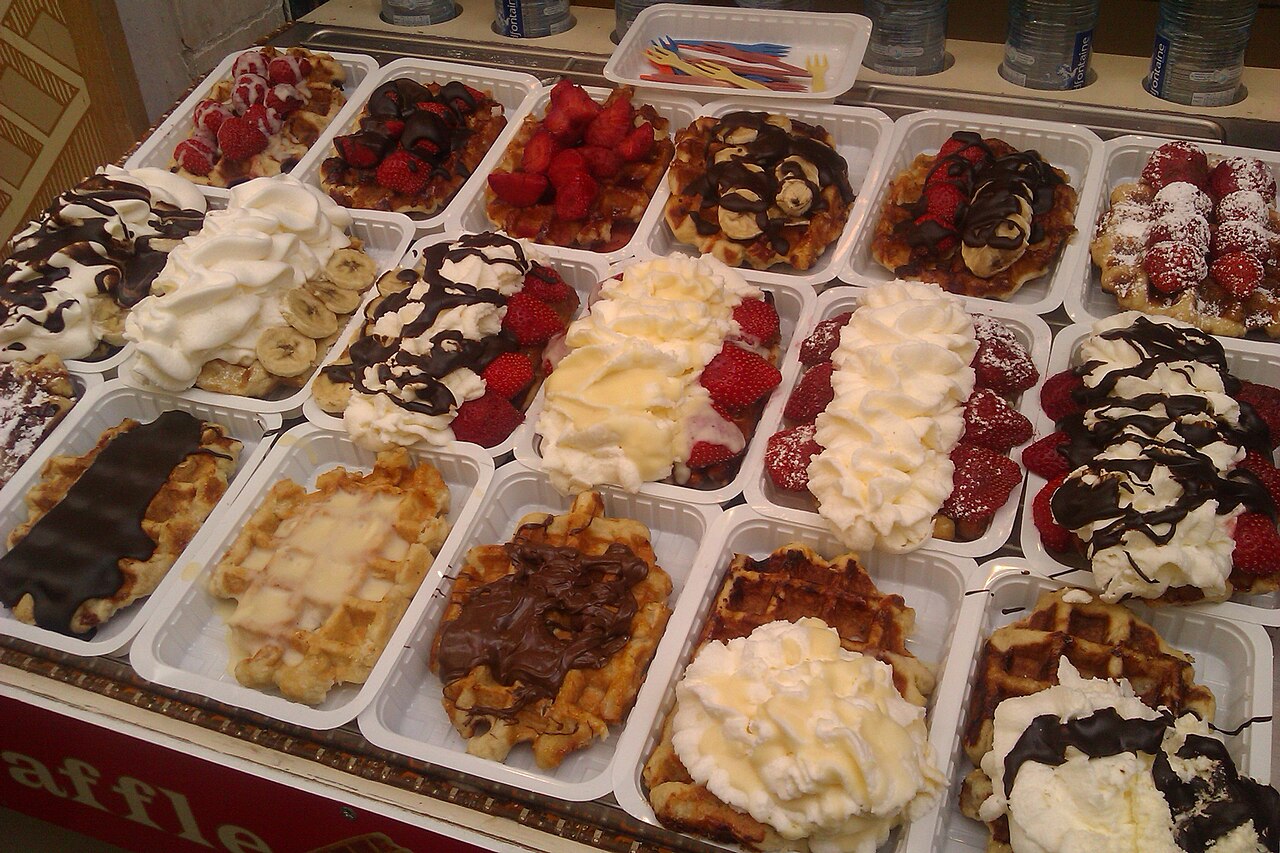
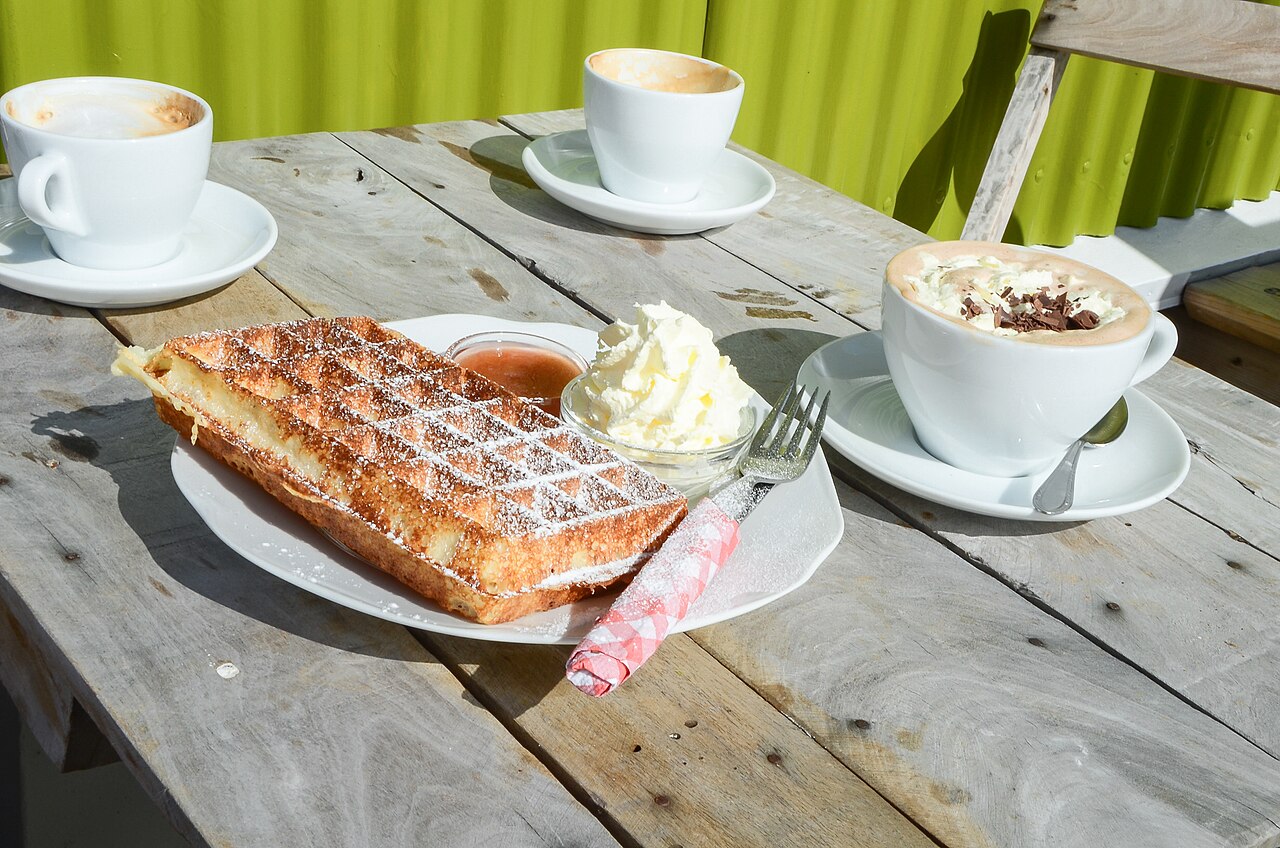
Belgian waffles differ from North American waffles in having a lighter batter, larger squares, and deeper pockets. Yeast was originally used for leavening, though baking powder is common today. They are frequently served as a breakfast item or dessert, topped with items like whipped cream, confectioners' sugar, soft fruit, chocolate spread, syrup, butter, margarine, or vanilla ice cream with fresh fruit such as strawberries. In Belgium itself, varieties include the Brussels waffle and the Liège waffle. The waffle was first showcased at Expo 58 in Brussels in 1958. It was introduced to the United States by Belgian Walter Cleyman at the 1962 Seattle World's Fair, served with whipped cream and strawberries. Further popularization came at the 1964 New York World's Fair, where Maurice Vermersch of Brussels offered a simplified version of the Brussels waffle. Because many Americans could not identify Brussels as Belgium's capital, Vermersch renamed it the Bel-Gem Waffle, selling it with whipped cream and strawberries for one dollar.
- origin
- Belgium
- introduced to US
- 1962 at Century 21 Exposition in Seattle
- popularized in US
- 1964 New York World's Fair
- key promoters
- Walter Cleyman and Maurice Vermersch
- alternative name
- Bel-Gem Waffle
- common toppings
- whipped cream, strawberries, syrup, butter, chocolate spread, ice cream
Lore & Background
Belgian waffles were originally showcased in 1958 at Expo 58 in Brussels. They were introduced to the United States in 1962 at the Century 21 Exposition in Seattle by a Belgian named Walter Cleyman, served with whipped cream and strawberries. The waffles gained further popularity at the 1964 New York World's Fair, where Maurice Vermersch of Brussels offered them based on a simplified recipe for Brussels waffles. Vermersch renamed them the Bel-Gem Waffle after realizing many Americans could not identify Brussels as the capital of Belgium. These waffles were sold for a dollar with whipped cream and strawberries.
Reader's Guide
Belgian waffles hold significance as a globally recognized breakfast and dessert item, distinct from North American waffles due to their lighter batter and deeper pockets. Their introduction to the United States at two major world fairs—the 1962 Seattle Century 21 Exposition and the 1964 New York World's Fair—cemented their place in American food culture. The waffles were promoted by Belgian expatriates Walter Cleyman and Maurice Vermersch, with Vermersch adapting the Brussels waffle recipe and rebranding it as the Bel-Gem Waffle to overcome geographic confusion. This marketing decision highlights the interplay between national identity and food branding. In Belgium, the waffle tradition includes multiple varieties such as Brussels and Liège waffles, but the 'Belgian waffle' as known in English-speaking countries is a simplified, yeast- or baking powder-leavened version. Its legacy endures as a versatile dish served with sweet toppings ranging from whipped cream and fruit to syrup and ice cream, bridging breakfast and dessert menus worldwide.
Did You Know?
- Belgian waffles were originally leavened with yeast, but baking powder is now often used.
- They were introduced to the United States in 1962 at the Century 21 Exposition in Seattle by Walter Cleyman.
- Maurice Vermersch renamed them Bel-Gem Waffles because many Americans could not identify Brussels as the capital of Belgium.
- At the 1964 New York World's Fair, Belgian waffles were sold for a dollar with whipped cream and strawberries.
Culinary Identity & Preparation
In English-speaking culinary contexts, Belgian waffles occupy a distinct niche defined by their physical structure: a noticeably lighter batter, larger square shapes, and deeper pockets compared to their North American counterparts. The leavening method has evolved over time—originally relying on yeast for rise, modern preparations frequently substitute baking powder for convenience and speed. On the plate, these waffles are most commonly encountered as a breakfast staple, though their versatility extends well beyond the morning table. Toppings range widely: a dusting of confectioners' sugar, a dollop of whipped cream, soft fresh fruit, or a generous spread of chocolate. Some prefer the classic pairing of syrup with butter or margarine. When reimagined as a dessert, the waffle takes on a new role, often accompanied by vanilla ice cream and fresh strawberries, transforming a breakfast item into an indulgent sweet course.
Domestic Belgian Waffle Traditions
Within Belgium's own borders, the waffle is far from a single monolithic treat. The country recognizes at least two principal varieties: the Brussels waffle and the Liège waffle, each carrying its own regional identity and preparation traditions. This domestic diversity is a point of pride and distinction, underscoring that the waffle is deeply woven into Belgian food culture rather than being a single export product. The Brussels waffle, in particular, would later serve as the foundational recipe from which the simplified American version was derived. Meanwhile, the Liège waffle represents a separate lineage within the same national tradition. Together, these two types illustrate that what English-speaking consumers encounter as the Belgian waffle is actually a simplification of a richer, more varied domestic landscape of waffle-making that has evolved across different Belgian cities and regions over generations.
The American Debut: From Brussels to Seattle
The journey of the Belgian waffle into American consciousness began at Expo 58 in Brussels, where the treat was first showcased to an international audience. However, the critical bridge to the United States was built in 1962, when a Belgian named Walter Cleyman brought the waffle to the Century 21 Exposition in Seattle. There, visitors encountered the golden squares served alongside whipped cream and fresh strawberries—a presentation that would become the waffle's signature American pairing. Cleyman's introduction at the Seattle fair marked the first time the broader American public experienced what would come to be known as the Belgian waffle, setting the stage for the treat's rapid ascent in American food culture over the following years. The Seattle debut was, in essence, the moment a regional European breakfast item first crossed the Atlantic and found a receptive audience on the other side.
The Bel-Gem Moment at the 1964 World's Fair
The waffle's American breakthrough truly crystallized at the 1964 New York World's Fair, held at Flushing Meadows Park in Queens. There, Maurice Vermersch, a man from Brussels, took the lead in popularizing the treat to a massive fairground crowd. He worked largely from a simplified recipe based on the traditional Brussels waffle, making it accessible and reproducible for American tastes. A revealing anecdote emerged from this period: Vermersch observed that many American visitors struggled to correctly identify Brussels as Belgium's capital. In response, he rebranded the product as the Bel-Gem Waffle, a name that sidestepped the geographic confusion while still evoking Belgian origin. Priced at a single dollar and served with the now-familiar whipped cream and strawberries, the Bel-Gem waffle became an iconic fairground indulgence that cemented the treat's place in American food memory.
Gallery




Frequently Asked Questions
What is a Belgian waffle and where does it originate?
It is a lighter, larger waffle with notably deeper pockets than its North American counterpart, hailing from Belgium. The batter was traditionally leavened with yeast, though most modern recipes rely on baking powder instead.
How does a Belgian waffle differ from a standard American waffle?
Belgian waffles feature a lighter batter, bigger square shapes, and significantly deeper pockets compared to their North American versions. Within Belgium itself, they split into two main styles: the Brussels waffle and the Liège waffle.
When did the Belgian waffle first become internationally famous?
The treat made its global debut at Expo 58 in Brussels in 1958. It then crossed the Atlantic, appearing at the 1962 Century 21 Exposition in Seattle before truly taking off at the 1964 New York World's Fair.
What role does a Belgian waffle play in a typical meal?
It functions as both a breakfast staple and a dessert option in Belgian cuisine. Popular toppings include whipped cream, fresh strawberries, syrup, butter, chocolate spread, or a scoop of vanilla ice cream with fruit.
Why is the Belgian waffle considered important in American food history?
Promoters Walter Cleyman and Maurice Vermersch, working under the Bel-Gem Waffle name, showcased the treat at major US world's fair exhibitions in the early 1960s. Their marketing efforts transformed it into a widely adored American breakfast and dessert item.
More in Belgian cuisine 1-24
Spotted an error? Know more?
This is a living reference — every entry is fact-audited, and reader corrections feed straight into our audit queue. Suggest an edit · See this site's audit record