Cinnamon roll
Sweet roll served in Northern Europe and North America.

Evan-Amos · Public domain
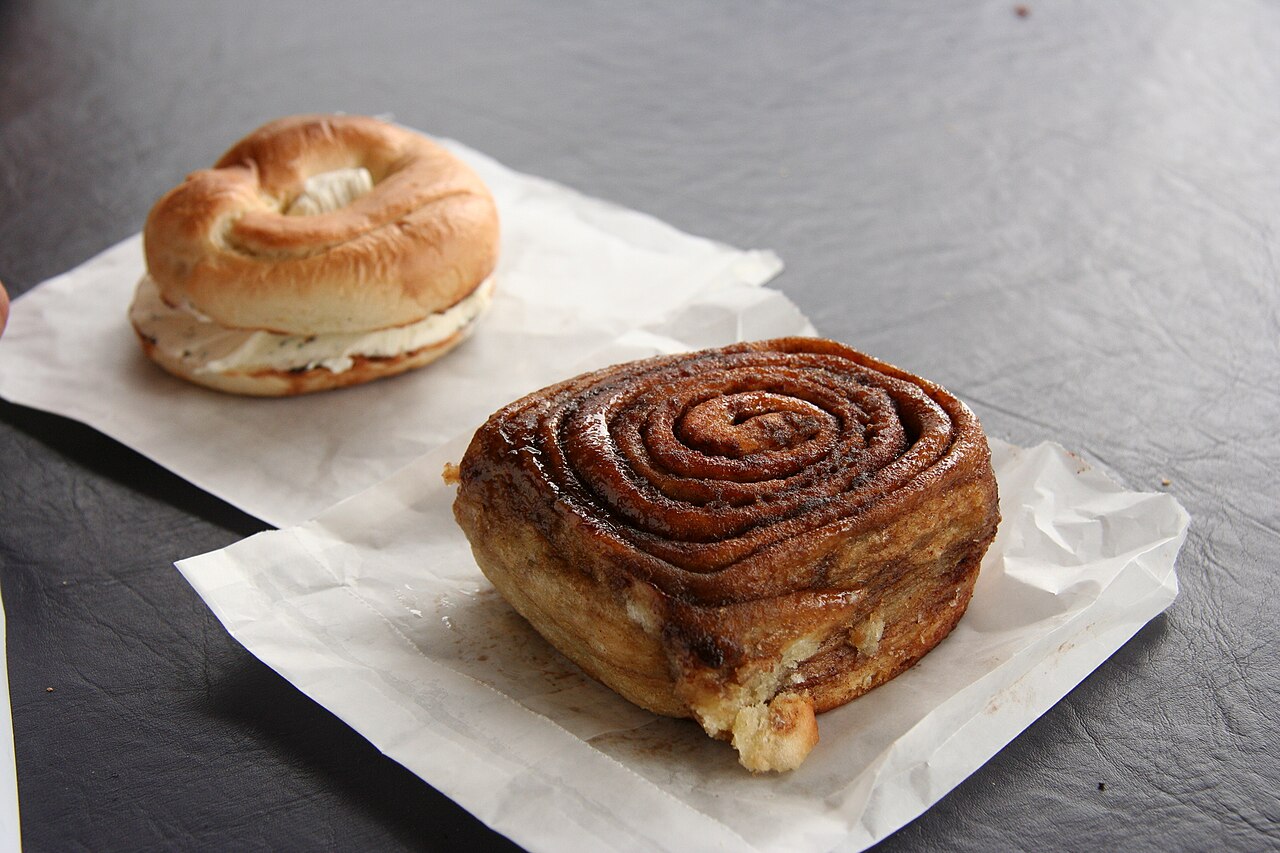
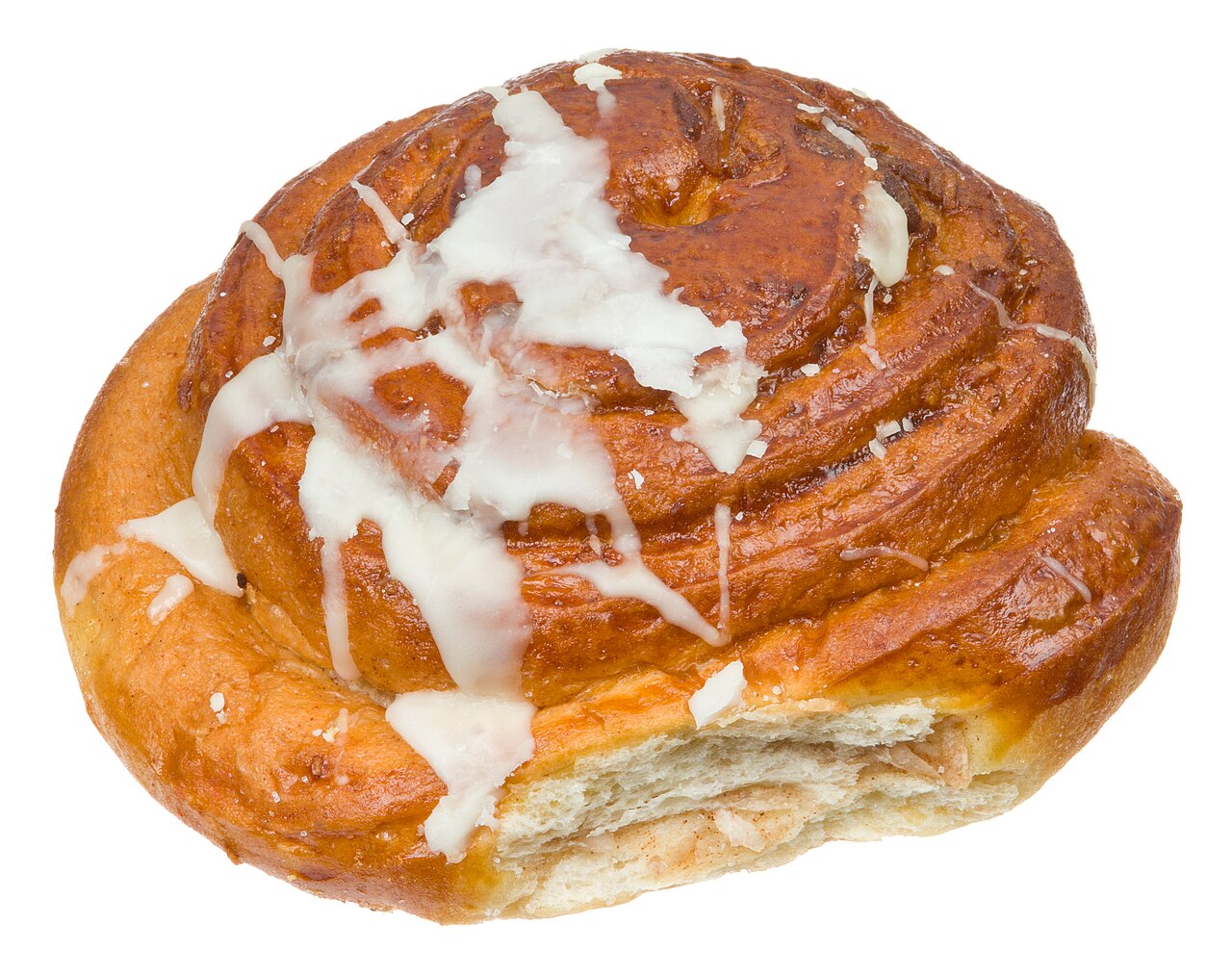
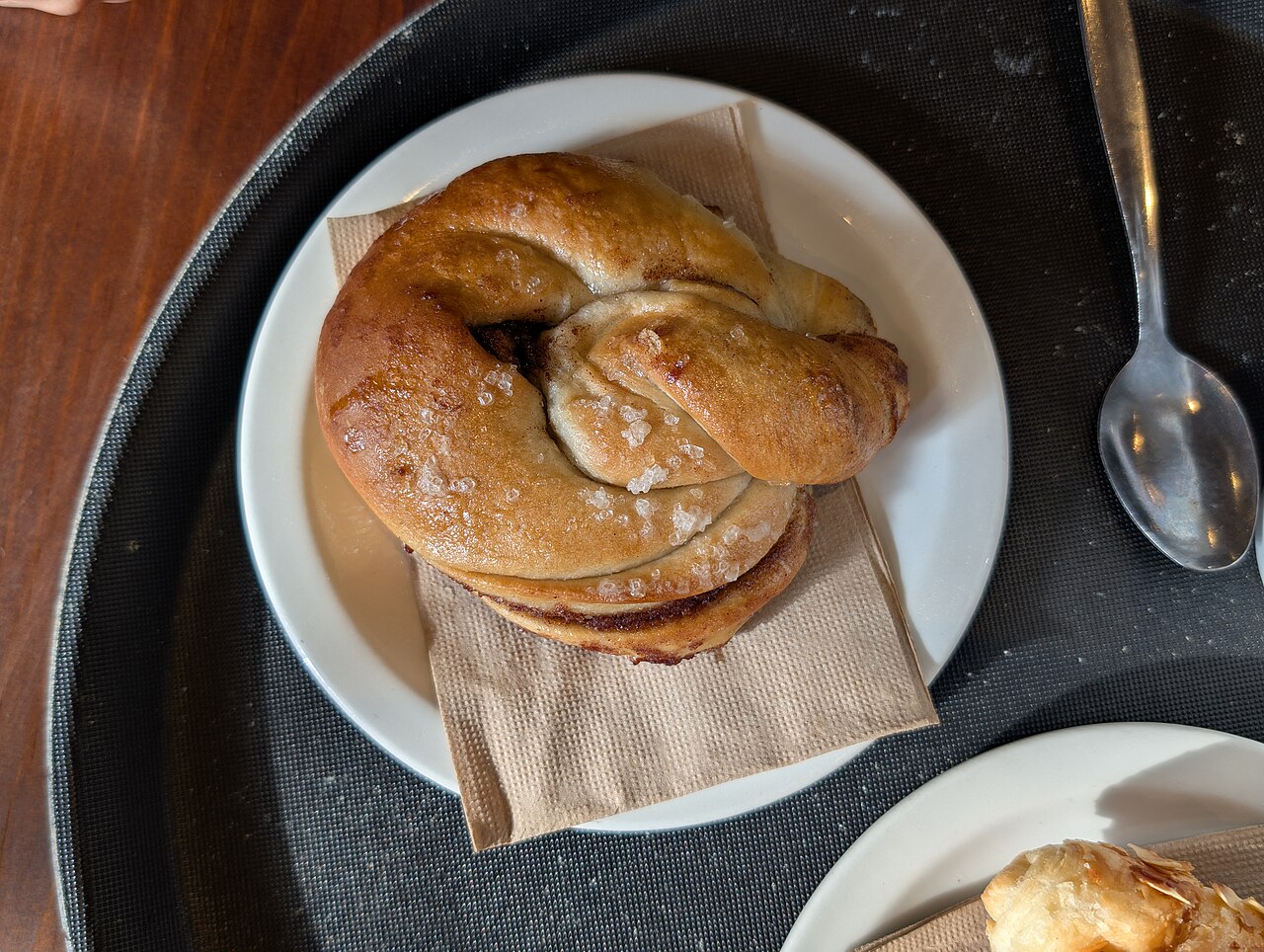
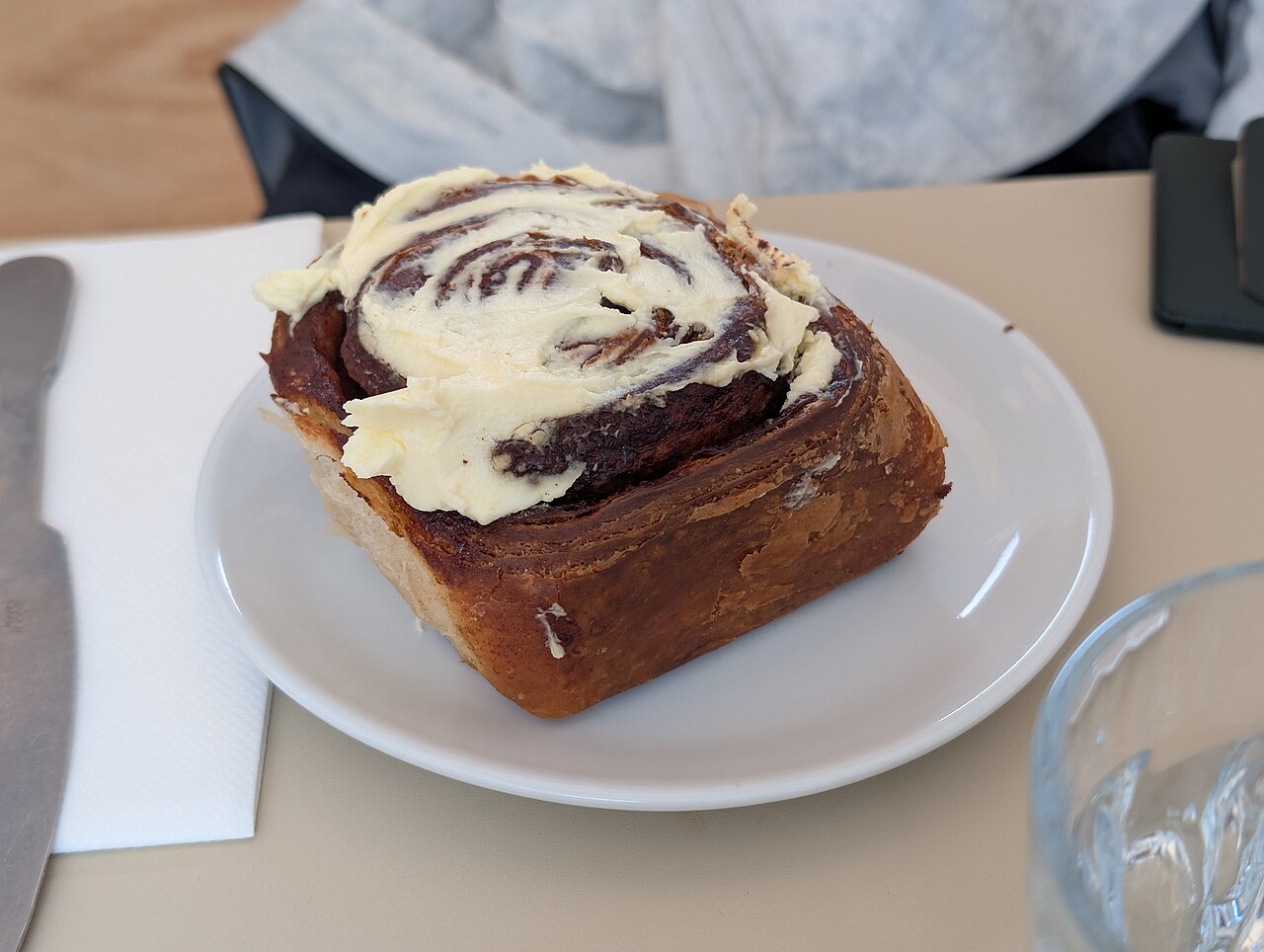
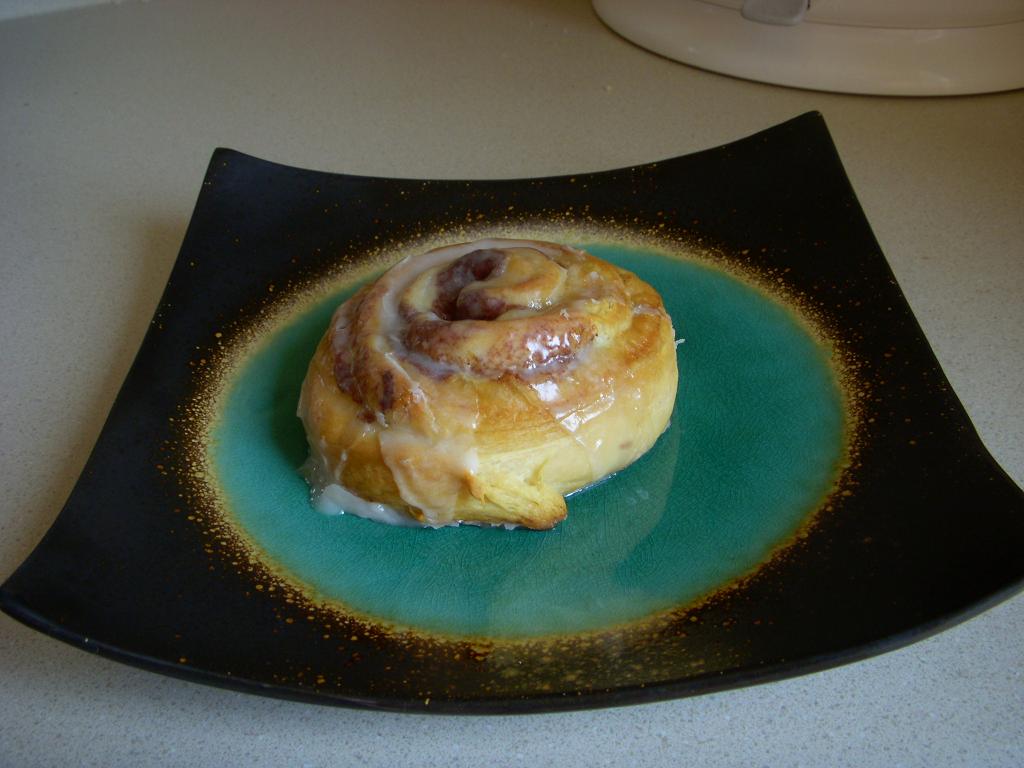
A cinnamon roll (also known as cinnamon bun, cinnamon swirl, cinnamon scroll, cinnamon Danish and cinnamon snail) is a sweet roll commonly served in Northern Europe and North America. It consists of a rolled sheet of yeast-leavened sweet bread dough or Viennoiserie, onto which a cinnamon and sugar mixture is sprinkled over a thin coat of butter, then rolled, cut, and baked. The origin of cinnamon rolls is unknown, but the earliest known recipes appear in 17th-century English and Dutch cookbooks.
- field
- Baked goods
- known_for
- Sweet roll with cinnamon and sugar filling
- origin
- Unknown; earliest known recipes from 17th-century England and the Netherlands
- variations
- Cinnamon bun, cinnamon swirl, cinnamon scroll, cinnamon Danish, cinnamon snail
Lore & Background
Arab spice traders introduced Sri Lankan cinnamon to Europe. The earliest known recipes for cinnamon rolls appear in 17th-century English and Dutch cookbooks. From there, they spread across Northern Europe, including Scandinavia, though the specific introduction to Norway by Hanseatic traders is not historically established. The Swedish kanelbulle became widespread in the 1920s, building on earlier similar recipes. Cinnamon rolls spread to the United States with German immigrants.
Size varies: small rolls about 5 cm in diameter, larger ones about 10 cm. In Finland, the korvapuusti is typically around 10–12 cm in diameter. In Haga, Gothenburg, Sweden, hagabullar are notably large, but a specific diameter of 30 cm is not a documented standard. National variations include the Danish kanelsnegl, Norwegian kanelbolle, Icelandic kanilsnúður, Estonian kaneelirull, and German/Austrian Zimtschnecke. In Sweden, October 4 is promoted as Cinnamon Roll Day since 1999.
In North America, cinnamon rolls are often large, baked in a pan, and topped with cream cheese icing. They may be fried and served as a donut variation. In the American Midwest, they are commonly served with chili. In Asia, a tangzhong technique using pre-gelatinized flour gives a soft texture. In Sweden and Finland, they are enjoyed during fika, a coffee-and-baked-goods break. In Denmark, extra large Wednesday snails are sold on Wednesdays.
Reader's Guide
The cinnamon roll is a significant cultural baked good across Northern Europe and North America, with deep historical roots tracing to German recipes from the 16th century and possible earlier origins in Byzantium. Its spread via Hanseatic traders to Scandinavia and later to the United States with German immigrants illustrates how trade and migration shaped food traditions. The roll's many names—cinnamon bun, swirl, scroll, Danish, snail—reflect its widespread adaptation. National variations, such as the Swedish kanelbulle with cardamom, the Finnish korvapuusti with pearl sugar, and the American version with cream cheese icing, show local innovation. The establishment of Cinnamon Roll Day on October 4 in Sweden since 1999 highlights its modern cultural importance. The roll's versatility extends to size (from 5 cm to over 30 cm), preparation (baked or deep-fried), and serving contexts (breakfast, dessert, or coffee break). In the American Midwest, the unusual pairing with chili originated in school lunches. The tangzhong technique in Asia demonstrates further adaptation. Overall, the cinnamon roll remains a beloved comfort food that bridges continents and centuries.
Did You Know?
- The earliest known recipes for cinnamon rolls appear in 17th-century English and Dutch cookbooks.
- In Finland, a cinnamon roll called korvapuusti is typically around 10–12 cm in diameter.
- Since 1999, October 4 has been promoted as Cinnamon Roll Day in Sweden.
- In the American Midwest, cinnamon rolls are commonly served with chili.
Origins and the Long Road to the Bakery Counter
The story of the cinnamon roll begins far from any kitchen. Arab spice traders carried cinnamon from Sri Lanka into European markets, seeding the ingredient that would one day define a beloved pastry. The precise birthplace of the rolled, cinnamon-dusted bun remains uncertain, though some accounts point toward Byzantium as a possible cradle. The earliest documented recipes, however, surface in sixteenth-century Germany, anchoring the treat firmly in a European lineage. From German ovens, the pastry traveled northward along commercial routes. Hanseatic merchants carried it through the Norwegian port of Bergen, where locals adopted it under the name skillingsbolle, a term that translates simply to shilling bun. The version Swedes recognize today as kanelbulle did not fully crystallize until after the First World War, evidence that the recipe kept evolving well into the modern era. The pastry eventually crossed the Atlantic riding with waves of German immigration, taking permanent residence in American bakeries and home kitchens where it endures to this day.
A Continent of Names and a World of Techniques
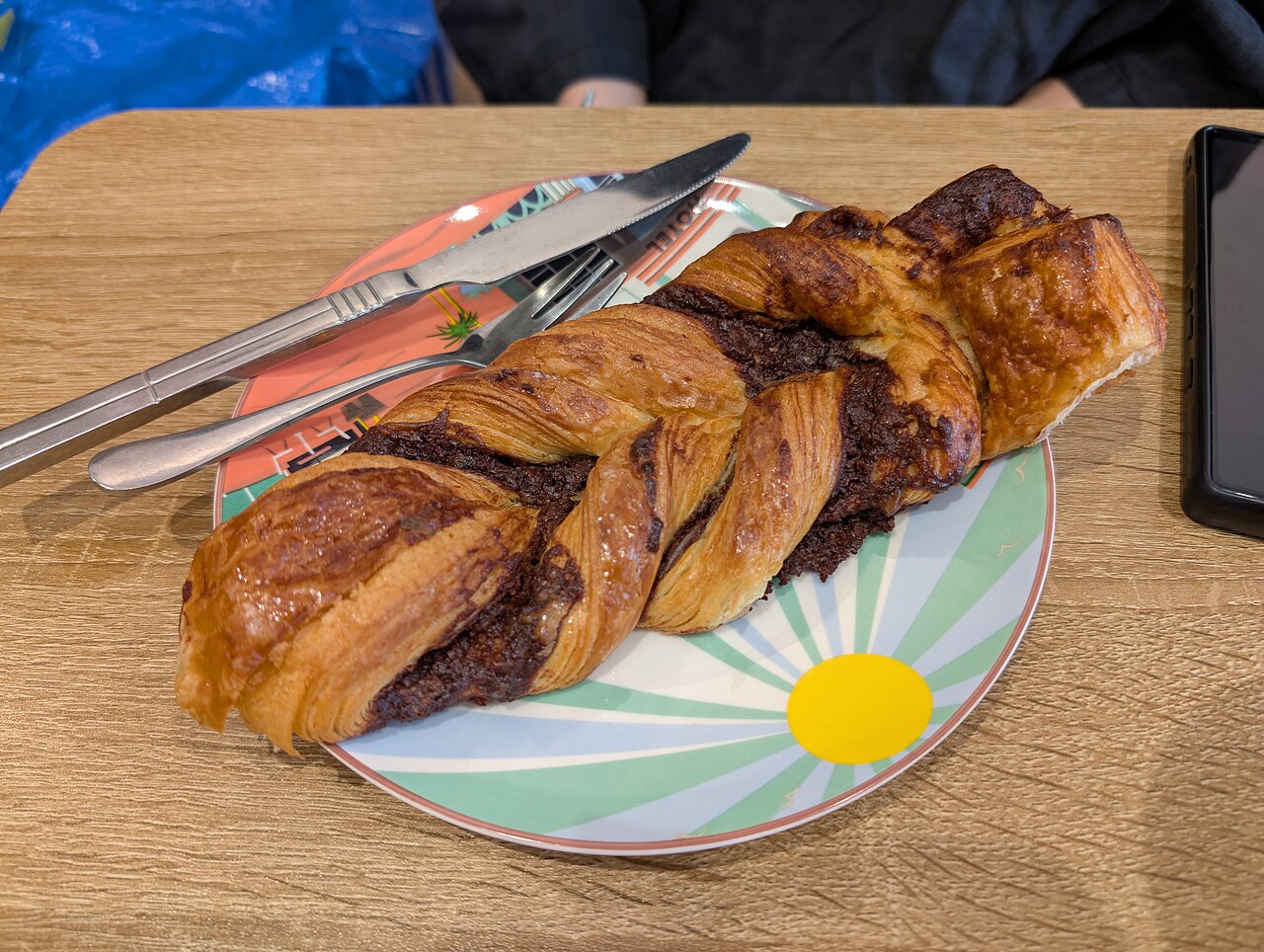
No two regions serve the cinnamon roll in quite the same fashion, and the kaleidoscope of local names underscores how deeply the pastry has been absorbed into distinct culinary identities. Denmark calls it kanelsnegl, Sweden kanelbulle, Norway kanelbolle or skillingsbolle, Iceland kanilsnúður, and Estonia kaneelirull. Finland offers the korvapuusti, a cardamom-laced variant crowned with pearl sugar, while Austria and Germany use the name Zimtschnecke and also produce the Hamburg-born Franzbrötchen, a croissant-inspired cousin that notably omits cinnamon. In Slovakia and the Czech Republic, the pastry earns the playful moniker for cinnamon snails. Across the Atlantic, American bakers favor a larger, pan-baked roll drenched in cream cheese icing, sometimes even deep-fried and glazed like a raised donut. In Asian kitchens, bakers employ the tangzhong technique, pre-gelatinizing starches at precisely 65 degrees Celsius to achieve a soft, feathery crumb with a longer shelf life. Even within a single nation, the roll can shift from a weekday breakfast to a holiday centerpiece, a testament to its remarkable adaptability.
From Pocket-Sized Bites to the Queen of the Kitchen
The cinnamon roll resists a single standard size, and regional pride frequently manifests in the sheer dimensions of the bun. Most commercial vendors offer two common formats: a compact roll roughly five centimeters across and a larger version measuring about ten centimeters to a side. Finland pushes the boundaries further with the korvapuusti, a name that figuratively translates to a cuff on the ear, a playful allusion to being disciplined. These can reach twenty centimeters in diameter and weigh as much as two hundred grams. Yet the true giants belong to Sweden. In the Haga district of Gothenburg, bakers produce the hagabullar, affectionately dubbed the Queen of the Kitchen. These monumental pastries stretch to thirty centimeters or more in diameter, dwarfing their continental cousins. Remarkably, despite their impressive scale, hagabullar are not classified as a communal or sharing roll; they remain an individual indulgence. The full size spectrum, from a palm-sized bite to a plate-covering spectacle, illustrates how a simple rolled dough becomes a canvas for local expression.
Fika, Football, and the Rituals That Bind
Few pastries are woven so tightly into the social fabric of a culture as the cinnamon roll. In Sweden, the afternoon ritual of fika, coffee paired with baked goods, places the kanelbulle at the heart of workplace breaks, family gatherings, and friend get-togethers. Since 1999, October 4 has been celebrated as Kanelbullens dag, a national theme day marked by a significant portion of the Swedish population. Denmark has its own weekly tradition: the Wednesday snail, an extra-large cinnamon bun that emerged in the 1990s when the national football team typically played on that day, giving fans a pastry to accompany the match. In Austria and Germany, the Zimtschnecke is a standard companion for Kaffe und Kuchen, the beloved afternoon coffee-and-cake custom. In Slovakia and the Czech Republic, cinnamon snails are a cornerstone of Christmas baking, prepared alongside vanilla crescents and linzer cookies in countless households. In the American Midwest, a more unusual pairing has taken hold: cinnamon rolls served alongside chili, a combination that traces back to school lunch programs. These rituals, from the formal to the whimsical, show how a humble rolled bun can anchor an entire culture's sense of comfort and community.
Gallery
Frequently Asked Questions
What exactly is a cinnamon roll in Belgian baking?
It's a sweet, rolled pastry made from a sheet of yeast-leavened dough (or a Viennoiserie base) that gets a thin butter layer, a cinnamon-and-sugar sprinkle, then is rolled up, sliced, and baked. Think of it as the cozy, spiced cousin of a plain brioche bun.
What are all the alternative names fans use for it?
You'll hear it called a cinnamon bun, cinnamon swirl, cinnamon scroll, cinnamon Danish, or even a cinnamon snail depending on the region or baker. They all point to the same rolled, cinnamon-spiced sweet bread.
Where did the cinnamon roll actually originate?
No one can pin down a single birthplace, so its origin remains officially unknown. The oldest recipes we can trace back to show up in 17th-century English and Dutch cookbooks, which is why both culinary traditions staked a claim.
How is it traditionally prepared?
The dough is rolled out flat, brushed with butter, dusted with a cinnamon-sugar mix, then tightly coiled into a log before being cut into individual rounds and baked until golden. The result is a soft, layered roll with a sweet, spiced swirl running through the center.
Where is the cinnamon roll most commonly enjoyed?
It's a staple across Northern Europe and North America, where it shows up in bakeries, cafés, and home kitchens alike. In Belgian contexts it fits right alongside other sweet baked goods as a café-accompaniment or breakfast treat.
More in Belgian cuisine 1-24
Spotted an error? Know more?
This is a living reference — every entry is fact-audited, and reader corrections feed straight into our audit queue. Suggest an edit · See this site's audit record