Estaminet
Historic drinking and gaming establishments of northern France and Belgium.

An estaminet is an establishment found in Picardy, French Flanders, Luxembourg, and Brussels that serves drinks, sells tobacco, and offers traditional games. These establishments are considered part of the cultural heritage of these regions. The word was also used in Paris in the 19th century, as noted by Jules Lovy in 1858.
- field
- Hospitality and cultural heritage
- region
- Picardy, French Flanders, Luxembourg, Brussels
- known_for
- Serving drinks, selling tobacco, offering traditional games, and preserving regional culture
- etymology
- From Picard 'estamet', meaning a pillar supporting a roof, later the room itself
- modern_usage
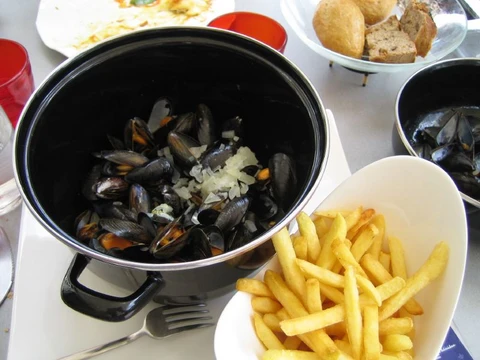
- Refers to taverns, bistrots, inns, and brasseries in Nord Département with rustic decor and regional dishes
Lore & Background
In the early 19th century, smoking was forbidden in elegant cafés but permitted in estaminets. Before World War I, the word was common, referring to places where one could drink and smoke, sometimes combined with a grocery or farrier. Estaminets served as social hubs for workers and meeting points for local societies, such as pigeon-keeping clubs or feather-bowling players. Singing societies often included the estaminet's name in their own, with examples recorded in Flers, Lambersart, Lille, Roubaix, and Tourcoing. In Lille before the war, people relaxed in estaminets by singing patois refrains and playing games like jeu du beigneau, jeu du bouchon, skittles, darts, and strength competitions.
Reader's Guide
Estaminets hold significance as cultural heritage sites in Picardy, French Flanders, Luxembourg, and Brussels, preserving traditional social practices and regional identity. During World War I, they became known among British soldiers (Tommies) for serving egg and chips, cheap wine, and beer behind the lines. In modern times, the name is revived for taverns and bistrots that use ancient tools as ornaments, with hop hanging from ceilings, old pictures on walls, and ember pots on fireplaces. Menus feature Flemish dishes like Waterzoï and Potjevleesch, and a placard above the door warns against cursing. The word appears in works by Victor Hugo, a short story by Gerard Walschap, and a poem by Ivor Gurney. The Brussels estaminet 'In 't Spinnekopke' received the Bronze Zinneke award for informal ambassadorship. The Guide Ravet-Anceau des estaminets, first published in 2005, lists estaminets from northern France and Belgium.
Did You Know?
- The Académie française defined estaminet in 1802 as 'Cabaret où l'on vend du vin, de la bière, & où l'on donne à manger.'
- No widely-known, continuously operating estaminet in Brussels is documented as being exactly 300 years old.
- During World War I, estaminets served egg and chips to British soldiers, but the dish was already common and not specifically popularized due to meat shortages.
- The word 'estaminet' comes from Picard 'estamet', meaning a pillar supporting a roof.
More in Belgian cuisine 1-24
Spotted an error? Know more?
This is a living reference — every entry is fact-audited, and reader corrections feed straight into our audit queue. Suggest an edit · See this site's audit record