Paling in 't groen
Belgian dish of eel in green herb sauce.

Paling in 't groen, also known as Anguilles au vert, comes from Belgium, specifically the Flemish Region near the Scheldt River between Dendermonde and Antwerp. The name, which translates from Dutch as "Eel in the Green," describes freshwater eel served in a sauce made with green herbs. While it is traditionally prepared at home, some fishmongers and market stalls sell it ready-made but uncooked, and it can also be found in restaurants that specialize in the dish.
To prepare it, the eel is gutted, skinned, and decapitated, then cut into pieces about two inches long. These are simmered with a mix of finely chopped fresh herbs, which can include sage, ginger mint, oregano, sorrel, lemon balm (citronella), chervil, thyme, citrus thyme, savory, parsley, stinging nettle, spearmint, burnet, watercress, tarragon, chives, and basil. Finely chopped shallot, cornflour, a little butter, and salt are also added. The stew is done when the white flesh easily separates from the bone but still holds together with gentle stirring; the starch should make the sauce thick enough to flow slowly on a plate after a minute. Some cooks add spinach for a brighter green color, though purists object. Variations may include beer or wine, lemon juice, egg yolk, or even chicken broth.
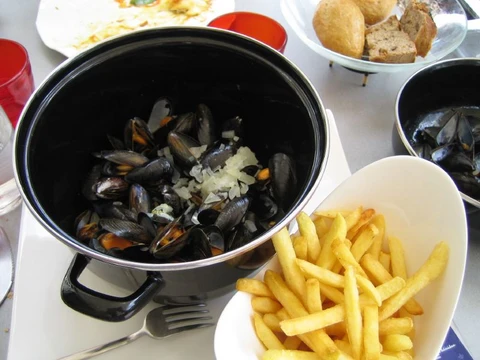
The dish is usually served hot with chips or bread, though it can be eaten cold. Diners sometimes squeeze lemon over the eel pieces.
Local river eel has become rare or undesirable due to pollution. Farmed eel tends to be very fatty and less appealing gastronomically, so wild eel is typically imported. As a result, it has become a threatened and expensive ingredient.
- field
- Cuisine
- nationality
- Belgian (Flemish Region)
- known_for
- Freshwater eel in a green herb sauce
- main_ingredient
- Freshwater eel
- typical_herbs
- Sage, ginger mint, oregano, sorrel, lemon balm, chervil, thyme, citrus thyme, savory, parsley, stinging nettle, spearmint, burnet, watercress, tarragon, chives, basil
Lore & Background
The dish is prepared by simmering two-inch cuttings of gutted, skinned eel with a mix of finely chopped fresh herbs, which may include sage, ginger mint, oregano, sorrel, lemon balm, chervil, thyme, citrus thyme, savory, parsley, stinging nettle, spearmint, burnet, watercress, tarragon, chives, and basil. Finely chopped shallot, cornflour, a little butter, and salt are added. The stew is done when the white flesh separates easily from the bone but still stays on when stirred gently; the sauce should be a thickly flowing liquid after a minute on a plate. Some cooks add spinach for a brighter green color, though other aficionados reject this. Variations with beer or wine, lemon juice, egg yolk, or chicken broth occur. The dish is normally served hot with chips or bread, and consumers may squeeze lemon over the pieces of eel.
Reader's Guide
Paling in 't groen represents a traditional Belgian dish from the Flemish Region along the Scheldt river. Its significance lies in its use of freshwater eel and a distinctive blend of fresh herbs, reflecting local culinary practices. The dish is typically homemade but also available from fishmongers, market stalls, and specialty restaurants. The preparation method emphasizes a careful balance of herbs and starch to achieve a thick, flowing sauce. The dish faces challenges due to the rarity of local river eel from pollution, leading to reliance on imported wild eel, which has become threatened and expensive. Farmed eel is considered less desirable due to its fat content. The dish's legacy is tied to its regional identity and the traditional herb combinations, though variations exist. Its continued presence in specialty restaurants and markets underscores its cultural importance in Belgian cuisine.
Did You Know?
- The dish is also known as Anguilles au vert in French.
- The eel is simmered with a mix of up to 18 different fresh herbs.
- Some cooks add spinach for a brighter green color, though other aficionados reject this.
- Local river eel has become rare due to pollution, so wild eel is usually imported.
More in Belgian cuisine 1-24
Spotted an error? Know more?
This is a living reference — every entry is fact-audited, and reader corrections feed straight into our audit queue. Suggest an edit · See this site's audit record